
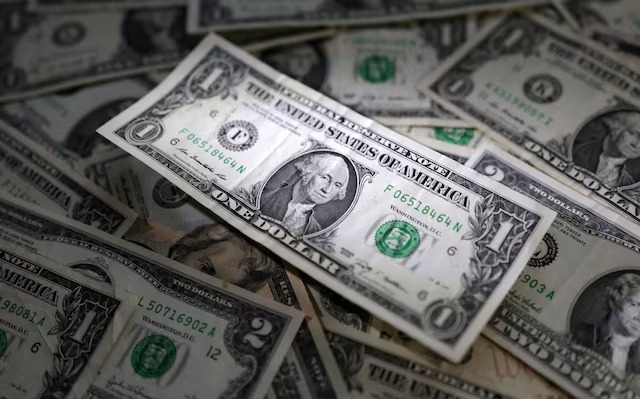
The dollar's surge since the U.S.-European Union trade deal seems a little counterintuitive at first glance, but the rally suggests the greenback may be shedding its elevated trade risk premium - whether Washington wants that or not. The weekend's U.S.-EU agreement averted a likely protracted trade war by halving threatened U.S. import tariffs on European goods in return for market access and investment commitments. It mirrored a similar deal made with Japan last week, though it covers four times as much U.S. trade. Get a look at the day ahead in U.S. and global markets with the Morning Bid U.S. newsletter. Sign up here. Advertisement · Scroll to continue But, curiously, news of the Japan deal last Tuesday pushed the yen higher, initially at least. There was no such boon for the euro on Monday - as it tumbled over 1% through the day against a resurgent dollar. Euro/$ FX rate falls sharply after brief pop on US-EU trade deal Euro/$ FX rate falls sharply after brief pop on US-EU trade deal Some people pointed to disquiet within Europe about whether the bloc rolled over too easily, only to end up with tariffs some 14 percentage points higher than they were at the start of the year anyway. Others focused on the impact of likely exaggerated European investment and spending pledges. But something else seemed to be stirring in a broader worldwide dollar rally that went way beyond the euro, a possible unwinding of the risk premium that had been built into the currency since April to account for Washington's seemingly chaotic tariff swipes and possible reactions. Advertisement · Scroll to continue With EU, Japan and UK deals in the bag and intense talks under way with China, Canada and Mexico, Washington has essentially defused tensions surrounding the looming August 1 trade deal deadline. And the agreements completed now cover a combined 60% of all U.S. trade. The China standoff will likely rumble on but negotiations are under way in Stockholm and standing pacts will likely be extended, with Beijing's hand weakened by trade deals elsewhere. What's more, the Trump administration appears to have successfully managed all this with a minimum of retaliation and limited economic damage to date. The effective U.S. tariff rate is set to end somewhere between 15% and 20%. That may be a possible drag on growth at home and abroad, but tariff income is flattering U.S. government revenues at a relatively low cost. Any U.S. consumer inflation fallout coming down the pike will keep the Federal Reserve cautious for longer about interest rate cuts - but that too may be a lift for the dollar if it's more responsive to the rates picture again. 00:21 Market Rundown: Investors and politicians turn on US-EU trade deal
The video player is currently playing an ad. Chart shows how prices of imported and domestic goods at four major U.S. retailers changed as tariffs were put in place. Chart shows how prices of imported and domestic goods at four major U.S. retailers changed as tariffs were put in place. "In terms of domestic political dynamics, Donald Trump is winning the trade war," AXA Group Chief Economist Gilles Moec wrote on Monday. Assuming this is the beginning of the end of the year's big tariff shock, businesses and markets may finally have some degree of certainty about the months ahead and allow a lot of paused planning and activity to resume - even if at measurably higher costs. Fading recession risks further on that, the dollar should again start to revert to more normal behavior tracking relative interest rates and economic signals rather than Truth Social posts. Uncertainty is always hard to quantify, but there are a few ways investors have been capturing it. A closely followed trade component of the Economic Policy Uncertainty Index series - the Baker-Bloom-Davis model - skyrocketed to unprecedented levels in April. But it has since subsided to its lowest point since January and is less than a quarter of April's peak.