
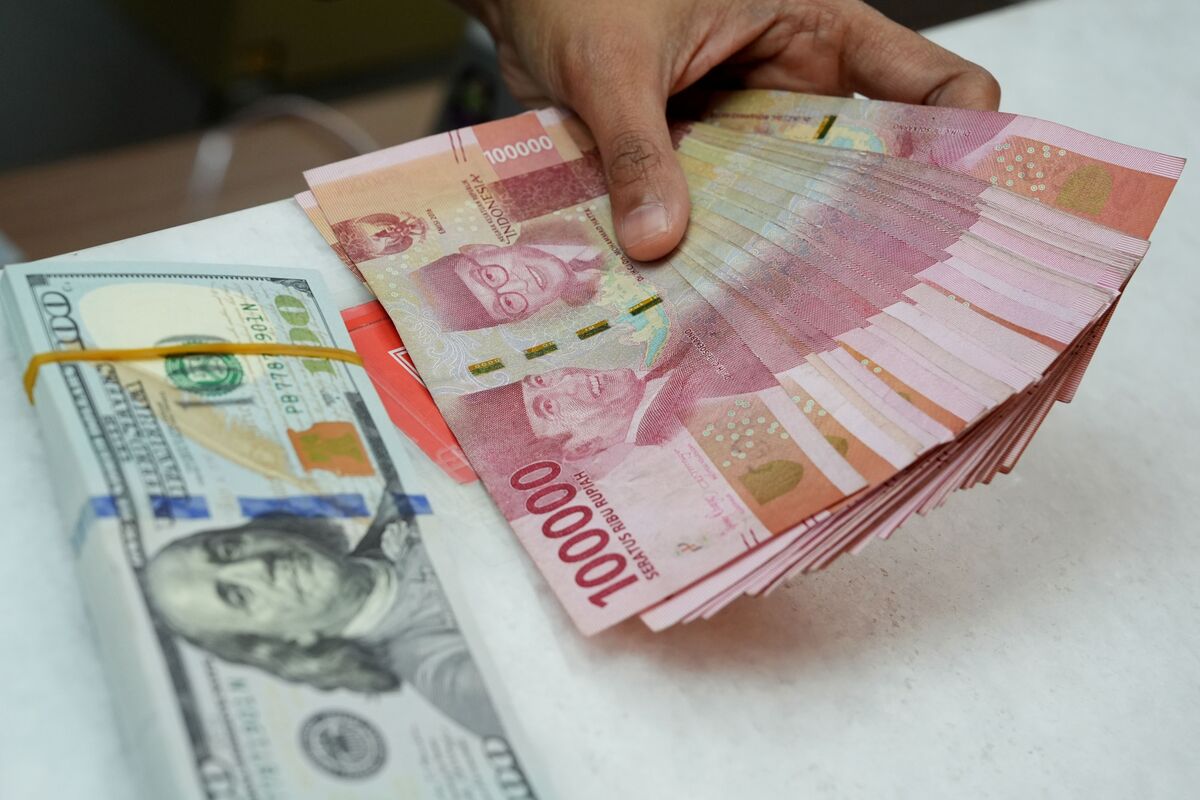
Indonesia's rupiah hit an all-time low against the U.S. dollar on Tuesday, even as the dollar index slid, amid renewed worries about central bank independence after the president picked his nephew among nominees for a senior central bank job.
The rupiah has fallen nearly 2% against the dollar in January, placing it among the worst performing emerging Asian currencies, after dropping 3.5% in 2025. Tuesday's intraday trading low of 16,985 to the dollar was a record.
Historically the currency has been sensitive to global market sentiment, but domestic factors have also been at play over the past year. Data this month showed President Prabowo Subianto booked a 2025 budget deficit of 2.92% of GDP, the widest in two decades except for the COVID-19 pandemic.
That renewed worries about fiscal sustainability in Southeast Asia's largest economy and triggered capital outflows in the bond market. The nomination of Prabowo's nephew Thomas Djiwandono as a member of Bank Indonesia's board has also reignited concerns about potential erosion of the central bank's autonomy.
The 10-year bond yield hit 6.33% on Tuesday, its highest in more than months. Rising dollar demand for imports ahead of the fasting month of Ramadan, which starts in the third week of February, added to the recent weakness, some analysts said.
Indonesia's 2025 budget deficit is low compared to many countries, but its laws limit the annual deficit and public debt at 3% and 60% of GDP, respectively. These limits have underpinned investor confidence since the late 1990s Asian financial crisis.
Since before Prabowo took office in October 2024, there has been speculation among investors and analysts about whether he will change the rules to make room for his costly welfare programmes, such as the $20-billion free meals programme and higher defence spending.
Last year, foreign investors net sold roughly $6.4 billion worth of Indonesian government bonds, with the biggest selloff in September, when Prabowo abruptly removed the country's long-time finance minister Sri Mulyani Indrawati.
The fiscal conservative was replaced by growth-focused economist Purbaya Yudhi Sadewa.
Concerns about central bank independence also grew in September after BI said it would help fund some of Prabowo's programmes, such as affordable housing, under a so-called "burden sharing" deal with the finance ministry.
Parliament is also deliberating on a bill with provisions to strengthen BI's role in supporting economic growth. Government and central bank officials have repeatedly denied any intervention in BI policymaking.
After Djiwandono's nomination, Purbaya again offered an assurance that BI would stay independent and would not fund government programmes. BI has been in a monetary easing cycle since 2024, cutting interest rates by a total of 150 basis points to lift economic growth. BI is expected to keep rates unchanged on Wednesday to limit further rupiah pressure.