
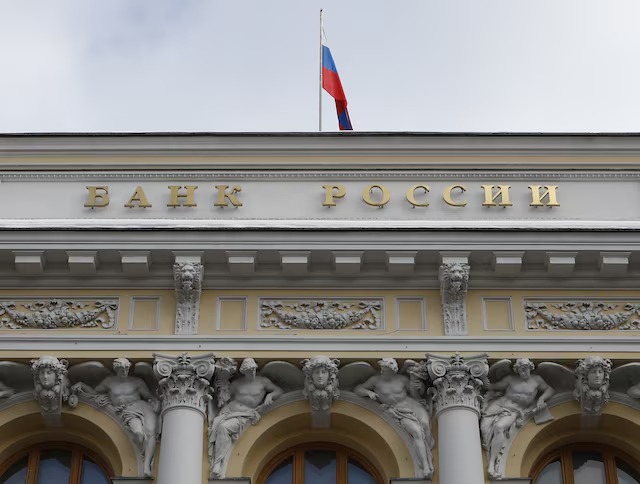
Russia's central bank cut its key interest rate by 50 basis points to 15.5% on Friday and signalled that rates could fall further in a bid to shore up the slowing wartime economy, which is struggling with high borrowing costs. The bank's surprise cut came just 10 days after President Vladimir Putin told top officials from the government and central bank to restore the economic growth rate and urged them not to simply monitor prices. The Week in Breakingviews newsletter offers insights and ideas from Reuters' global financial commentary team. Sign up here. Governor Elvira Nabiullina said that the bank considered holding the rate or cutting by 50 basis points, and that there had been a debate over data showing a sharp rise in prices at the start of the year. "We are now more confident that we can continue to lower the key rate at the upcoming meetings," Nabiullina, who has served as central bank chief since 2013, told reporters. "Larger steps" and also "pauses" were possible in the future, she said, adding: "Our signal is not an unconditional commitment to lower the rate." SURPRISE CUT In its release, the bank said further cuts would depend on inflation, but that the baseline scenario assumed the average key rate to be in the range from 13.5% to 14.5% in 2026.
Of the 24 analysts surveyed by Reuters ahead of the decision, 16 had expected the bank to hold rates. Just eight out of the 24 predicted a 50-basis-point cut. The rouble was little changed. Russia's economy, which showed significant resilience to Western sanctions over the course of the first three years of the conflict in Ukraine, slowed down sharply last year after the central bank hiked the key rate to fight inflation. Russia's government forecasts growth of 1.3% this year, after 1.0% in 2025. The central bank kept its 2026 growth forecast at 0.5%-1.5%. It sees growth of 1.5%-2.5% next year. A DOVISH SURPRISE Nicholas Farr, an economist at Capital Economics, said the rate cut was "a dovish surprise" but that he maintained his forecast for rates to end the year at 13%. The central bank raised its forecast for annual inflation to 4.5–5.5% from 4.0%-5.0%, but cautioned about the rise in prices in January. As tariff uncertainty fades, will U.S. shoppers open their wallets in 2026? Prices have risen by 2.1% since the start of the year, reaching 6.5% on an annual basis, as a result of an increase in value-added tax, which the government introduced to contain the budget deficit. Nabiullina said that the bank did not expect a wave of inflation and saw the price rises at the start of the year as the peak. But she did caution that, if the budget deficit rose, then it would limit the bank's ability to cut rates further. Reuters reported earlier this month that Russia's public deficit could balloon to almost triple the official target by end-2026, as a fall in Indian purchases of oil and growing oil trade discounts eat into revenues while spending may be higher than expected. The central bank was clear that Russia remained subject to global risks. U.S. President Donald Trump this month said he had agreed with India that New Delhi would halt oil purchases from Russia.