
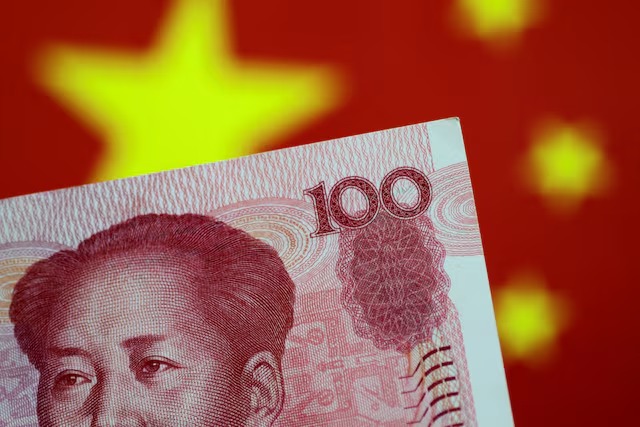
Chinese companies have rushed to derivatives for protection from currency exposure as a rising yuan has hurt some exporters for months and - more recently - the war in Iran has ramped up volatility.
The trend is breaking records and, sources said, is being encouraged in part by authorities. For now, short-term risk-aversion is driving investors, businesses and other participants into the dollar and an 11-month yuan rally has paused.
The Week in Breakingviews newsletter offers insights and ideas from Reuters' global financial commentary team. Sign up here.
Advertisement · Scroll to continue

But in the longer run, hedging will deepen the market and the scramble to do so suggests a major shift is underway as exporters reduce their dollar exposure, which could soon set the yuan higher particularly as exports boom.
Using forwards, a popular way for businesses to offset exposure by agreeing on foreign-exchange prices in advance, net selling of foreign currencies jumped to a record $39 billion in January.
That followed a record outright net selling of dollars to Chinese banks of $100 billion in December and a hefty $80 billion in January.
The trend will likely continue as China's exports surged 22% in January and February, putting the economy on track to top last year's record $1.2 trillion trade surplus.
Advertisement · Scroll to continue
Chinese exporters, who make sales abroad in dollars, have long kept most of the proceeds and invested them, converting to yuan only what they need to cover business costs at home.
A rising yuan presents a problem: Their dollar holdings diminish in value. So they have been selling dollars and increasing hedging, which has only added upward pressure on the yuan, in turn encouraging even more dollar selling.
"We have seen a stark transformation in market participants' view on the yuan over the past year," said Lynn Song, chief economist for Greater China at ING in Hong Kong.
"Where overwhelmingly we had a strong yuan depreciation bias in the markets, (we now have) almost a consensus yuan appreciation bias," he said, which in turn is encouraging hedging that ends up bolstering yuan gains in spot trading.