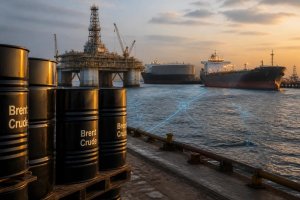
Oil prices rose on Thursday, reversing earlier declines as the market questioned whether peace talks between the U.S. and Iran would achieve a deal to end the war that has disrupted energy supplies from the Middle East. Brent crude futures climbed 67 cents, or 0.7%, to $95.60 a barrel at 1205 GMT. U.S. West Texas Intermediate crude futures were up 17 cents, or 0.2%, to $91.46 a barrel.
The Reuters Power Up newsletter provides everything you need to know about the global energy industry. Sign up here. "We remain sceptical of any immediate solving of this war," said PVM oil market analyst John Evans. "Pick any headline and there is always a counter."
The U.S.-Israeli war on Iran has caused unprecedented disruption of global oil and gas. It has led to the halting of traffic through the Strait of Hormuz, which typically carries about 20% of the world's oil and liquefied natural gas flows. POSSIBLE RESUMPTION OF PEACE TALKS U.S. and Iranian officials were considering returning to Pakistan for further talks as early as the coming weekend. Pakistan's army chief arrived in Tehran on Wednesday as a mediator.
A source briefed by Tehran told Reuters that Iran could consider allowing ships to sail freely through the Omani side of the Strait of Hormuz in the event of a deal to prevent renewed conflict after a two-week ceasefire started on April 8.
In another sign of a potential easing of military actions, Israel's cabinet met on Wednesday to discuss in neighbouring Lebanon, a senior Israeli official said, more than six weeks into its war with Iran-backed Hezbollah. Analysts from ING estimate that roughly 13 million barrels per day of oil flow has been disrupted by the closure of the Strait, after taking into consideration pipeline diversions and the trickle of tankers that have passed through the gateway. With the U.S. blockade on Iranian ports announced after the collapse of peace talks over the weekend, the disruption could increase, although some U.S. sanctioned tankers have made it through.
U.S. Treasury Secretary Scott Bessent said that Washington will not be renewing sanction waivers for some Iranian and Russian oil. Highlighting the constraints on global crude and oil product supply, U.S. inventories of oil, gasoline and distillate fuels fell last week, the Energy Information Administration said on Wednesday, as countries seeking barrels to replace the disrupted flows drove exports and meant imports shrank.
Additional reporting by Yuka Obayashi in Tokyo and Siyi Liu in Singapore; Editing by Lincoln Feast, Christian Schmollinger, Thomas Derpinghaus, Barbara Lewis and Jane Merriman