
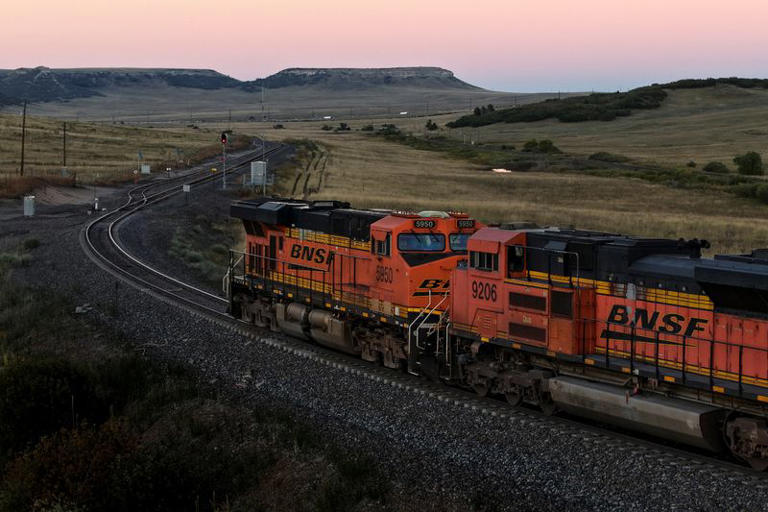
BNSF Railway, one of the crown jewels of Warren Buffett’s sprawling Berkshire Hathaway conglomerate, calls itself an environmental leader in the U.S. rail industry with the cleanest locomotive fleet in North America. “When you see our orange locomotives’ and freight cars’ steel wheels moving on steel rails, think green,” BNSF says in its latest sustainability overview.
But the company is the largest player in an industry that has a pollution problem: U.S. freight railroads are a major source of pollution, chuffing out more nitrogen oxide, the primary component of smog, than all the nation’s coal-fired power plants combined, according to a Reuters calculation using government data.
U.S. railroads together produced about 485,000 tons of nitrogen oxide in 2024, compared to 452,000 tons emitted by U.S. coal-fired power plants, according to a Reuters calculation of reported annual fuel consumption multiplied by the EPA’s 2023 weighted-average emission rates.
BNSF, the nation's largest freight railroad, accounts for about a third of that total, producing 161,500 tons of smog-causing nitrogen oxide in 2024, according to the data. “We don't dispute your number. BNSF is the biggest Class I railroad by volume,” BNSF said in an email.
BNSF's position as largest in the rail industry, as well as its profitability, will be challenged if regulators approve the planned $85 billion merger of Union Pacific and Norfolk Southern, which would create the first U.S. coast-to-coast freight rail operator, Morningstar railroad analyst Greggory Warren said.
Details on the rail industry’s recent NOx emissions performance, BNSF’s share of those emissions, and the factors driving the ongoing high levels of pollution have not previously been reported. Railroad locomotive pollution causes an estimated $48 billion in healthcare costs and 3,100 premature deaths annually in the United States, according to the EPA’s Co-Benefits Risk Assessment tool.
“Americans don’t realize how much harmful pollution comes from old diesel locomotives,” said Bill Magavern, policy director for the Coalition for Clean Air, a California group that advocates for public health. “EPA should require the railroad companies to modernize their fleets,” he said.
The EPA declined to comment specifically on rail pollution for this story, but said: "The Trump EPA is committed to enhancing our ability to deliver clean air, water, and land for all Americans.”
The railroad industry’s poor emissions performance is due mainly to the fact that it has largely stopped replacing its aging fleet of locomotives. The average age of U.S. locomotives is about 28 years, compared with 20 years in 2009, according to EPA and industry reports.
That's a problem because federal emissions standards for locomotives depend on how old they are with the oldest grandfathered into the lightest limits.
With no requirement to retire old locomotives, the U.S. freight rail industry has dragged its feet on buying new ones, a dynamic amplified by industry fears that new regulations under future administrations could render their investments obsolete, according to Environmental Protection Agency data, and interviews with analysts and railroad executives.