
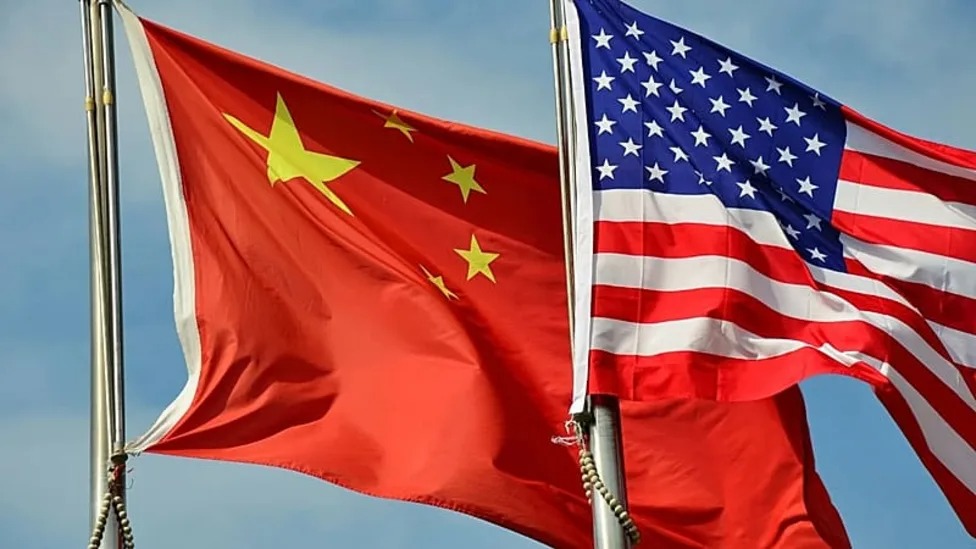
U.S. President Donald Trump will put artificial intelligence at the forefront of talks this week with Chinese leader Xi Jinping, a first that highlights the technology's strategic heft but substantive commitments are unlikely, said two U.S. officials with knowledge of preparations. Trump's Beijing visit unfolds as the U.S.-China AI rivalry intensifies into a contest some observers have compared to a Cold War-style nuclear arms race. Pressure to engage has grown after Claude maker Anthropic's launch of the powerful Mythos model, analysts say, raising the stakes for both sides. China was excluded from early access to a Mythos preview, raising concerns the technology could be exploited by bad actors to penetrate Chinese software and financial systems.
However, Nvidia (NVDA.O), opens new tab CEO Jensen Huang and top White House tech policy advisor Michael Kratsios are joining Trump's delegation, suggesting that more substantive conversations on AI and Nvidia's powerful H200 chips could be on the summit agenda. China has also floated to the U.S. a formal mechanism for AI dialogue led by Treasury Secretary Scott Bessent and Chinese vice finance minister Liao Min, according to one source briefed on China's outreach. The Wall Street Journal first reported on the dialogue last week. But expectations are low since both agencies do not specialise in AI and the Trump administration has only recently shifted towards pursuing safety vetting for advanced AI models.
White House officials acknowledged cutting-edge AI systems like Mythos made a "channel of communication" with China essential to avoid conflicts arising from their deployment. Market intelligence firm IDC China warns that shutting Chinese companies out of Mythos risks deepening a "generational gap" in AI defence capabilities between China and the West.
Anthropic said last month Mythos had found "thousands" of major vulnerabilities in operating systems and other software, triggering a scramble by banks and governments worldwide to shore up their cybersecurity defences. Washington has struck guardrails on advanced tech with Beijing before, on nuclear proliferation, and in 2024 both sides agreed that humans, not AI, must control nuclear-use decisions.
And so, I think that when legacy media realizes that they need to be more relatable to their audiences and stop talking
Now researchers warn the stakes are rising: advanced AI could accelerate bioweapons design, trigger financial shocks, supercharge cyber and disinformation campaigns, and even slip beyond human control to "rogue" systems acting on their own. Both sides could set up a no-blame hotline to flag suspected AI-driven incidents, said Kwan Yee Ng, head of international AI governance at Beijing-based AI safety consultancy Concordia AI.
"Getting senior Western figures to engage directly with China (on AI) has become increasingly difficult, though a positive signal from the Xi-Trump summit could change that.
A military hotline already exists, but U.S. officials have complained that China has often not picked up. Other analysts suggest establishing guardrails for frontier AI models or committing to reduce AI-enabled malicious activity, similar to the 2015 U.S.-China Cybersecurity Agreement